


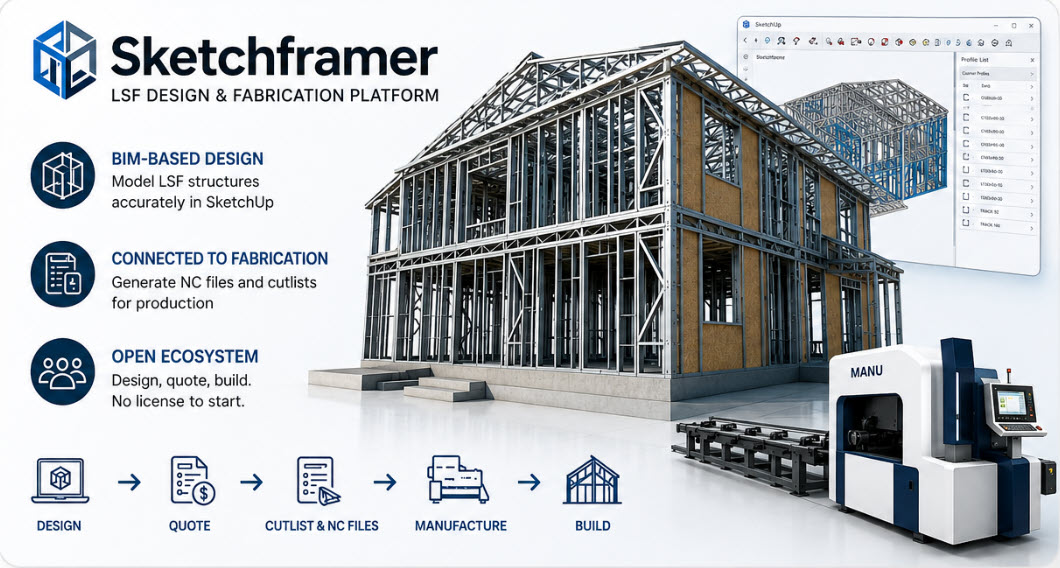
SKETCHFRAMER: REVOLUTIONIZING LIGHT STEEL FRAMING (LSF) FROM DESIGN TO FABRICATION
Sketchframer is a professional, BIM-based SketchUp plugin built by industry specialists that bridges the gap between 3D LSF design and digital fabrication . It allows users to model structures and generate cutlists entirely for free, paying only when moving to physical production
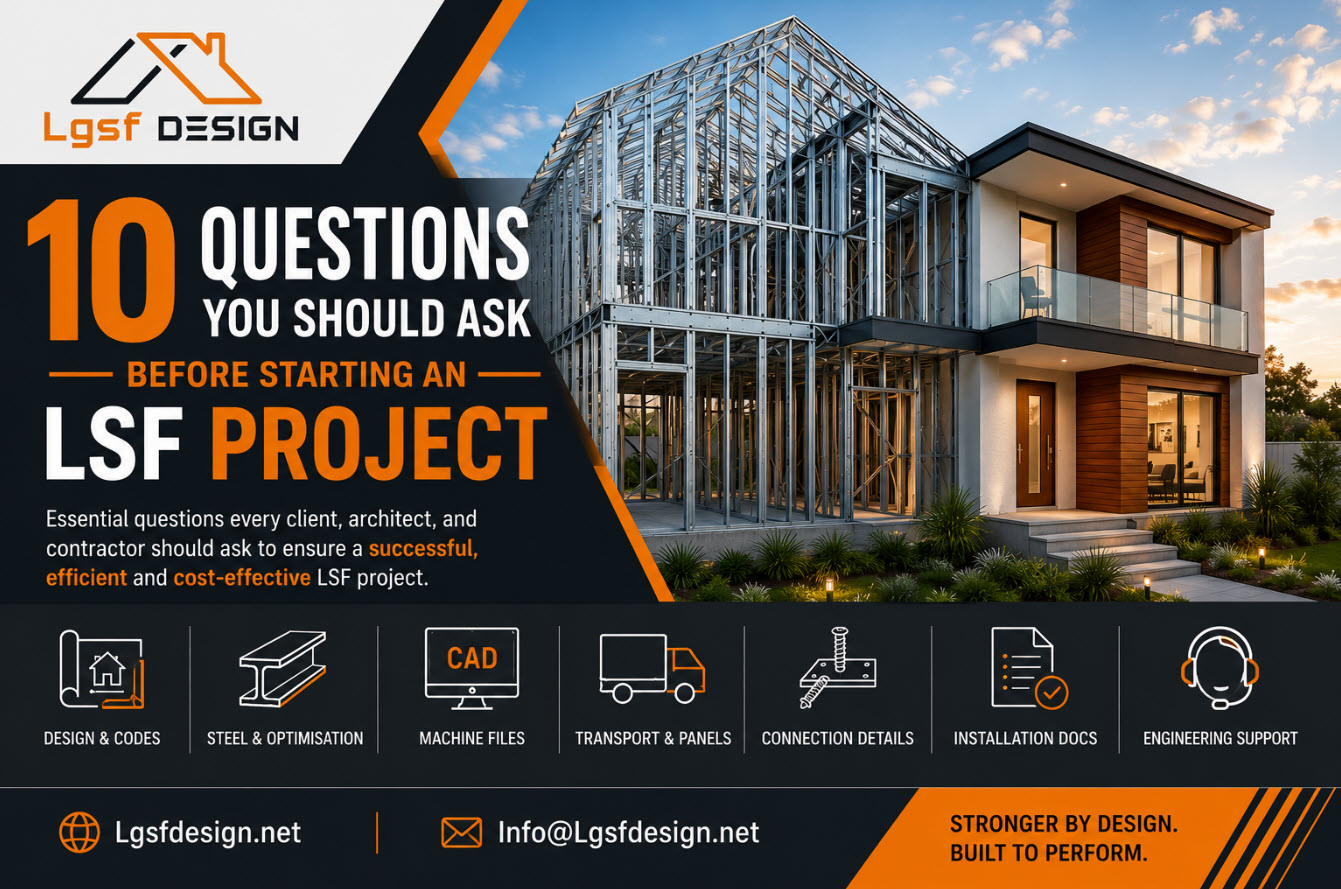
10 QUESTIONS YOU SHOULD ASK BEFORE STARTING A LIGHT GAUGE STEEL FRAME PROJECT
Planning a Light Gauge Steel Frame (LSF) project? Before construction begins, make sure you're asking the right questions. This guide covers the 10 most important considerations—from structural design and building codes to machine files, panel optimisation, connection details, and installation support. Whether you're a homeowner, architect, contractor, or developer, these insights will help you avoid costly mistakes and deliver a safer, more efficient LSF project.
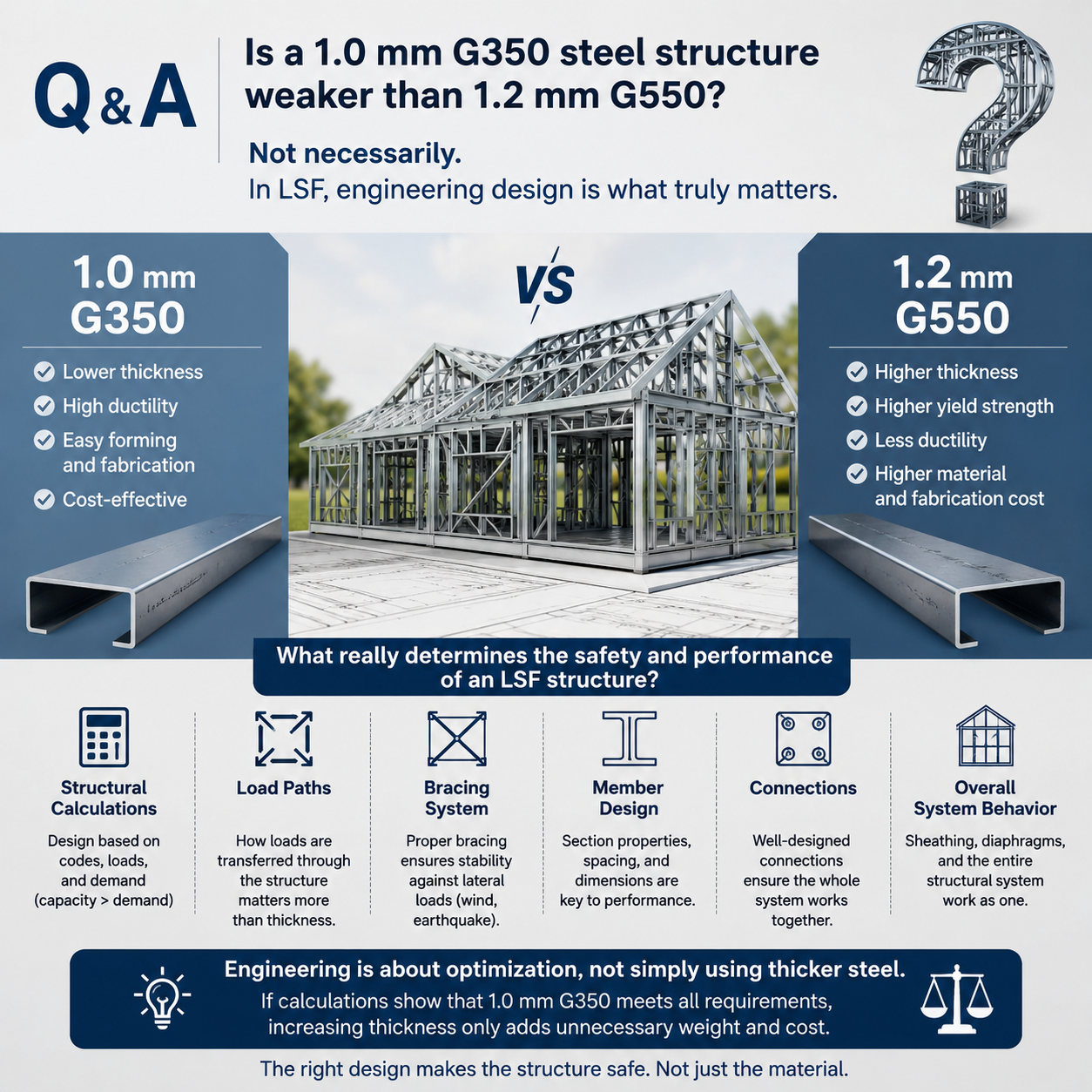
DOES THICKER STEEL ALWAYS MEAN A SAFER LSF STRUCTURE?
Many people judge LSF structures only by steel thickness or yield strength. But real structural safety comes from proper engineering design, load calculations, bracing systems, and overall structural behavior — not simply from using thicker steel. In this post, we discuss one of the most common misconceptions in the LSF industry.
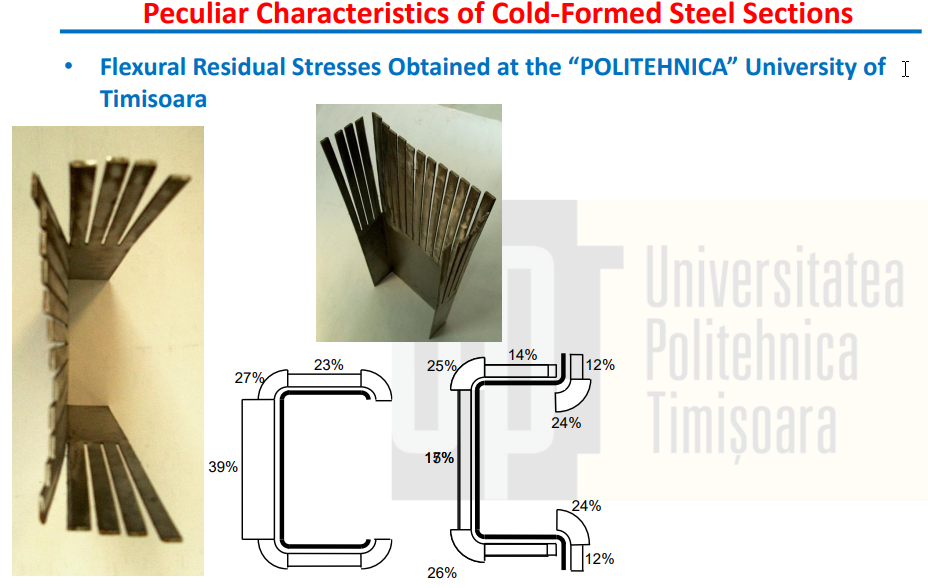
FLEXURAL RESIDUAL STRESSES.
In this study, carried out at the “POLITEHNICA” University of Timisoara, the section was cut into thin strips to release these internal stresses. The deformation of the strips reveals how residual stresses are distributed across the web, flanges, corners, and lips.